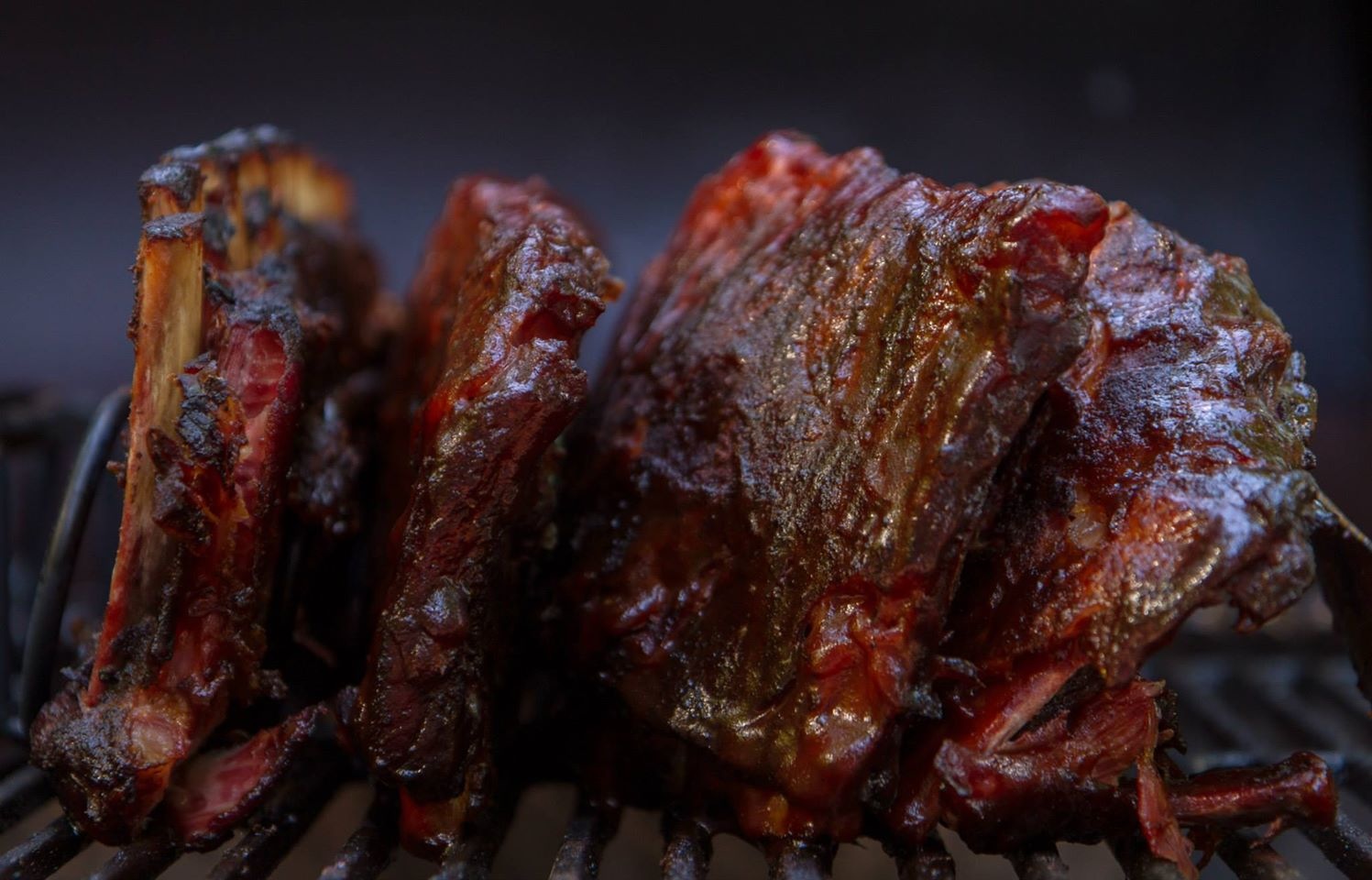


I’ve had my Pecos for about 4 years now and I thought I would update my post. The first thing I will say is that the Old Country pits have virtually doubled in price! I suppose that is a testament to the increase in popularity of traditional central Texas style meat smoking. It’s a very nuanced art form that produces amazing barbecue.
There is so much information out there it can be difficult to parse out what is what. My experience is that you just have to experiment. Everyone is different. Every smoker is different in that every environment is different. What works for me may not work for you (humidity, wind, rain, season, moisture content of your wood, etc.) Experiment, cook; you only get better by doing it.
I have smoked a lot meat in the last 4 years and gotten to know my Pecos pretty well. Well enough to know I should have bought the Brazos while they were only $1000. The thickness of the metal is crucial and the insulation it provides saves headaches, but by smoking dozens of briskets, racks of ribs, pork butts, beef ribs and chicken, I have learned that every smoke is different. While I really want a bigger, 250 or 500 gallon smoker, I have made my Pecos work very well for me.
First, fire management is the single most important key to mainaining consistent temps. I use small, 8 inch long and 3ish inch wide mini splits, 2 or 3 at a time. That seems to help manage a low temp without huge spikes from big fires. You don’t get as much of a coal bed, which can contribute to fluxuations, but the spikes are limited to 50+/- degrees.
As to modifications, I have experimented with all the mods, tuning plates, stack extensions, and removing the baffle (last mod due the finality of it not being a welder myself). Thankfully, removing the baffle is the only mod that seemed to work long term. The hot spot is by the firebox, rather than the middle of the smoker, and I put the water pan over that. The heat/smoke now primarily comes top down, which is key when I’ve got brisketsand pork butts on, fat side up to protect the meat. I’m sure that with enough experimentation, the other mods would also be effective, but for me, removing the baffle was the answer.
The Pecos and the Brazos are designed well for back yard BBQ pits, but they are cheap in comparison to some of the beefier models, Aaron Franklin’s pit, Primitive Pits, etc. Playing with the firebox door, stack damper and number of splits will give you a lot of information. I’m smoking ribs today at 225, door 2-3 inches open and stack damper half closed. The photo below is with 2-3 mini splits and has been consistent for over an hour, even with adding logs as the older ons burn down. Minor fluxuations when adding logs, but not more than 15-20 degrees.
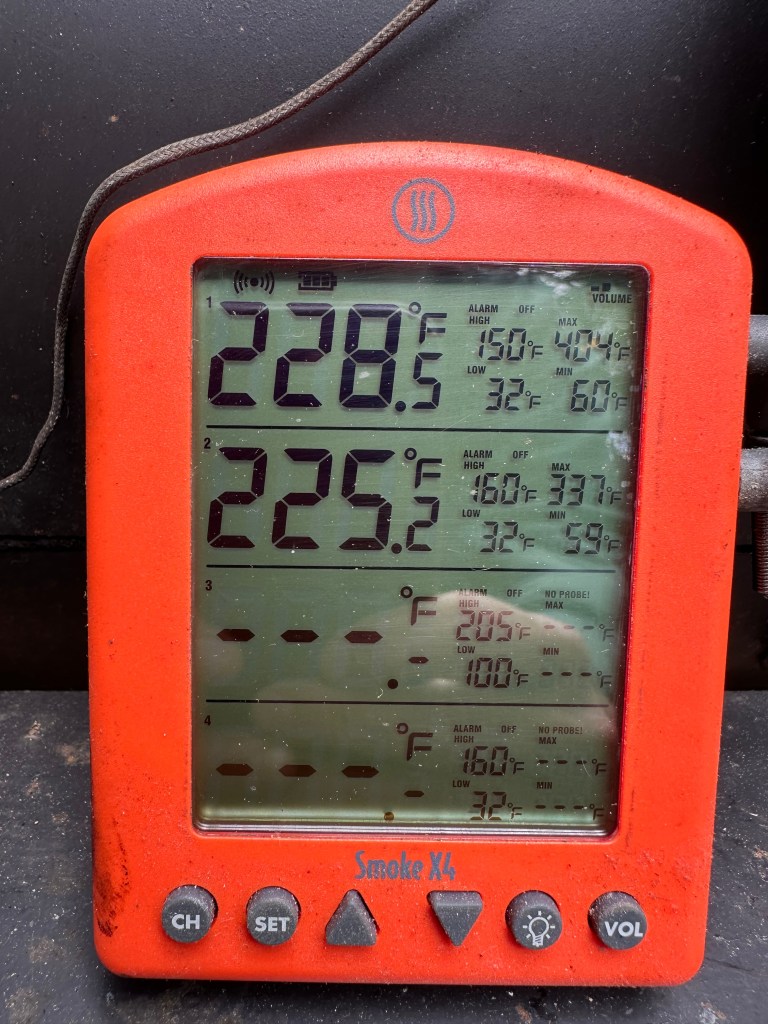
Another trick I’ve learned, which I think would be appropriate for any offset, is to spend 30-60 minutes “warming up” your smoker. I burn a 350-400 degree fire for up to an hour to warm everything up. I find that once I lower the temp down to cooking range, it maintains much better.
Again, the only way to get to know your smoker is to cook with it. It’s not a perfect science, it’s an art form. There is no one formula that makes it work. There are too many variables. I love my Pecos. I was able to smoke 75 pounds of brisket and pork butt over 2 days last spring with resounding success! Different days, however, call for different approaches. Be flexible and cook more barbecue!
 William Henry Outdoors/BBQ Life
2 responses to “Old Country BBQ Pits Pecos Smoker: Addendum”
I noticed you said removing the baffle was the only mod that helped long term. Does that mean you removed the stack extension? You mentioned in the original article that you extended the stack to 30″. Do you find that was unnecssary once the baffle was removed?
LikeLiked by 1 person
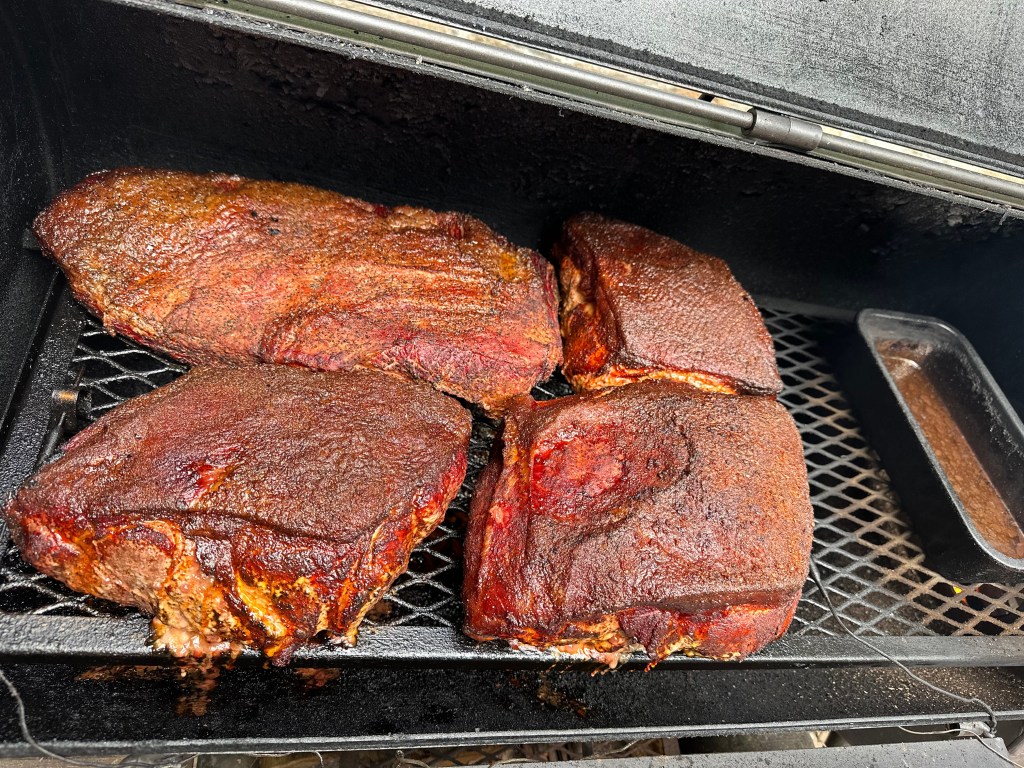
That’s correct! With no stack extension, the heat was directed downward and I found the hot spot tended to be in the center of the grate, under the meat. As a result, I had to cook briskets fat down, which I dont like to do (it just doesnt look as nice). With the 30″ stack extension the heat was still coming up from underneath, but because of the increased airflow the hot spot moved left. However, there was also a hot spot right by the fire box, though hot as hot as it is now. Without the baffle the hot spot is all the way right, leaving plenty of room for meat, and the hot spot is definitely hotter, like by a lot, but the heat comes top down now, which I prefer. I pack meat toward the stack, away from the fire box. As you can see in the last picture, there is plenty of room.
Definitely play around with the extension first and find what works for you though! The stove pipe is a cheap mod, but one of the most effective (and it isn’t permanent). There is a reason all the more expensive smokers have tall stacks. The reality is that the more you smoke the more you learn. It took me a couple years to figure it out for my situation, dozens of smokes! This is the way that works best for me. Have fun!
LikeLike